 Integration
Octagos Is on FHIR
So seamless, you'll forget it's an integration. Start in Epic or Octagos, switch in a click, and see the full clinical picture wherever you work.
Trusted by Leaders in Remote Monitoring



















What Octagos Changes for Your Clinic
Epic Medications and Problems, Beside the Report
Octagos reads each patient's Epic chart context over FHIR R4. Your providers see the problem list with ICD-10 diagnosis codes, active medications and insurance beside the device report.
One Signature, Filed to the Epic Chart
Providers e-sign within Octagos, automatically sending finalized reports and discrete device data to the patient's Epic chart without manual entry.Charges also post directly to Epic from the order.
Start in Epic, Sign in Octagos
Providers can launch Octagos directly from the patient's Epic chart, leveraging your organization's single sign-on (SSO) for seamless access to the reports and patients.
Hospitalizations and Procedures on the Trend
Octagos retrieves hospitalization and procedure data from Epic via FHIR R4, displaying key events alongside AF burden trends for improved clinical context.
How Octagos Connects to Epic
Octagos leverages a full bi-directional integrationwith Epic via FHIR API and HL7 interfaces.
Integration at a Glance
Chart Context
FHIR R4
Octagos reads medications, problem lists and insurance from Epic with each new transmission.
Orders and Results
HL7 v2
Orders go both ways, and signed reports and discrete data go to the Epic chart.
Single Sign-On
SSO
Staff sign in with your organization's identity provider.
Launch From Epic
SMART on FHIR
Providers open Octagos from the patient's Epic chart, and sign reports in Octagos.
What Your Team Sees After Go-Live
Octagos gives your team visibility into report delivery to Epic, flags reports that need attention, helps resolve patient matching issues and resend held reports.
In-Clinic Checks, Filed to the Visit
In-clinic device checks are captured and filed in the report to the Epic visit.
How Patient Matching Works
Octagos automatically matches patients to their Epic charts using a 3-step process including medical record numbers (MRNs). Uncertain matches are flagged for staff review and confirmation.
Delivery Status for Each Report
The electronic health record (EHR) page in Octagos shows each reviewed report's delivery status to Epic and explains held or failed reports.
A Light Lift for Your IT Team
About 12 weeks from kickoff to go-live, with no Octagos integration fees.
- Onboarding lead
- Project lead
- Integration engineer
- IT and security
- Integration engineer
- IT
- Integration engineer
- Tests and signs off with Octagos
- Integration engineer
- Clinic staff
- Customer Support lead integration engineer stays involved
- Clinic and IT staff
A Team You Know by Name
From kickoff through go-live, in-house Octagos onboarding and integration specialists work directly with your team.
Kickoff to Go-Live

Sybil,Onboarding

A.J.,Integrations
After Go-Live

Kendall,Customer Support

Ana,Clinical Services

Tom,Clinical Operations

Sheldon,Patient Engagement
Proof From Health Systems on Epic

Octagos is listed in Connection Hub on Epic Showroom.
Products on Connection Hub have a live connection to at least one Epic site.
Find Octagos in Connection Hub on Epic ShowroomRecognition
TIME World's Top HealthTech Companies
Named to TIME's World's Top HealthTech Companies in 2025 and 2026 (TIME and Statista), rated Very High in AI & Data Analytics in 2026.
View the 2026 List
Microsoft for Startups Pegasus Program
Selected for the Microsoft for Startups Pegasus Program, an invite-only program, in 2025.
Read About the Pegasus ProgramMicrosoft Marketplace
Available in Microsoft Marketplace. Eligible purchases can count toward your Microsoft Azure Consumption Commitment (MACC).
See Octagos in Microsoft MarketplaceAlways Secure




Questions IT Teams Ask
Answers to common questions about Octagos Epic integration. The Epic Implementation Guide details each team's work.
Yes. Octagos is a cardiac device remote monitoring platform that connects to the Epic EHR. It reads chart context over FHIR R4 and exchanges orders and results with Epic over HL7 v2 through your interface engine.
Transmissions from Medtronic, Abbott, Boston Scientific and Biotronik devices are collected automatically on a separate connection. See how Octagos monitors cardiac devices.
In the standard Epic setup, a result goes to Epic when your provider e-signs in Octagos. The HL7 v2 observation result (ORU) message contains the signed PDF report and discrete device data: device details, measurements, programmed settings, alerts and notes. Because the PDF travels with the result, no separate document interface is needed.
How the discrete values display depends on your Epic result build. In the standard setup, charges post in Epic from the order when the result is filed, so no charge message is needed. The Epic Implementation Guide covers the HL7 v2 messages in detail.
Yes. Where single sign-on (SSO) is on for your clinic, staff sign in at your identity provider and return to Octagos under your organization's sign-in policies. Roles are set per clinic in Octagos, and Octagos signs users out after inactivity.
The optional SMART on FHIR launch lets staff open Octagos from Epic in their browser, sign in to Octagos and reach the correct patient or report.
Yes, Octagos is SOC 2 Type II, SOC 3, HIPAA compliant, HITRUST e1, and ISO 27001 certified.
Your security team can get the security package under a non-disclosure agreement (NDA).
Connecting Octagos to Epic takes about 12 weeks from kickoff to go-live at your first facility. Octagos moves as fast as your team does.
Both teams test together in non-production and sign off in writing before go-live. The Epic Implementation Guide has the plan, week by week.
No Octagos fees to build or maintain your Epic integration. Epic licensing and your team's time are separate. See how Octagos pricing works.
When a report can't go to the Epic EHR, Octagos holds it and shows your staff why. Your staff send a held report again once the cause is fixed, and the Octagos team reviews any message that fails and sends it again.
Octagos logs order and result messages with their status.
After go-live, contact Octagos support at [email protected] with the report's transmission ID.
Yes. Octagos is listed in Connection Hub on Epic Showroom. The Octagos listing is in the Implantable Cardiac Device Integration category, and the Octagos SMART on FHIR Launch listing is in the Clinical Case Management category. Epic doesn't endorse or certify the apps it lists.
Get Started
Request the Epic Implementation Guide
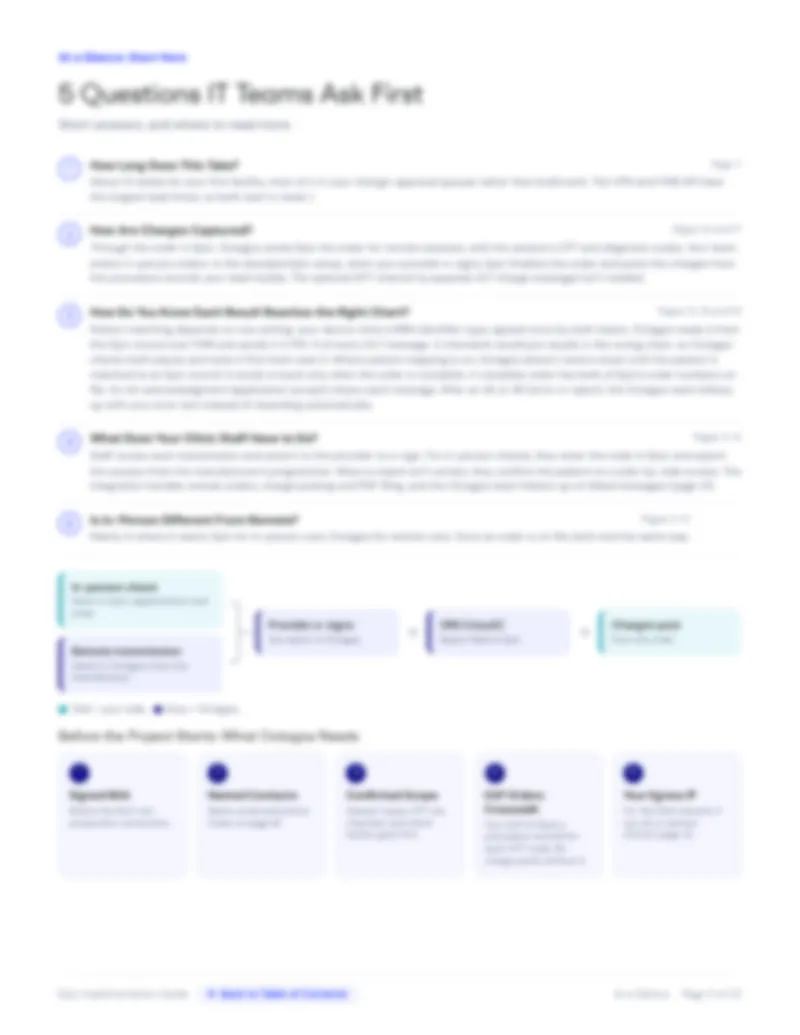
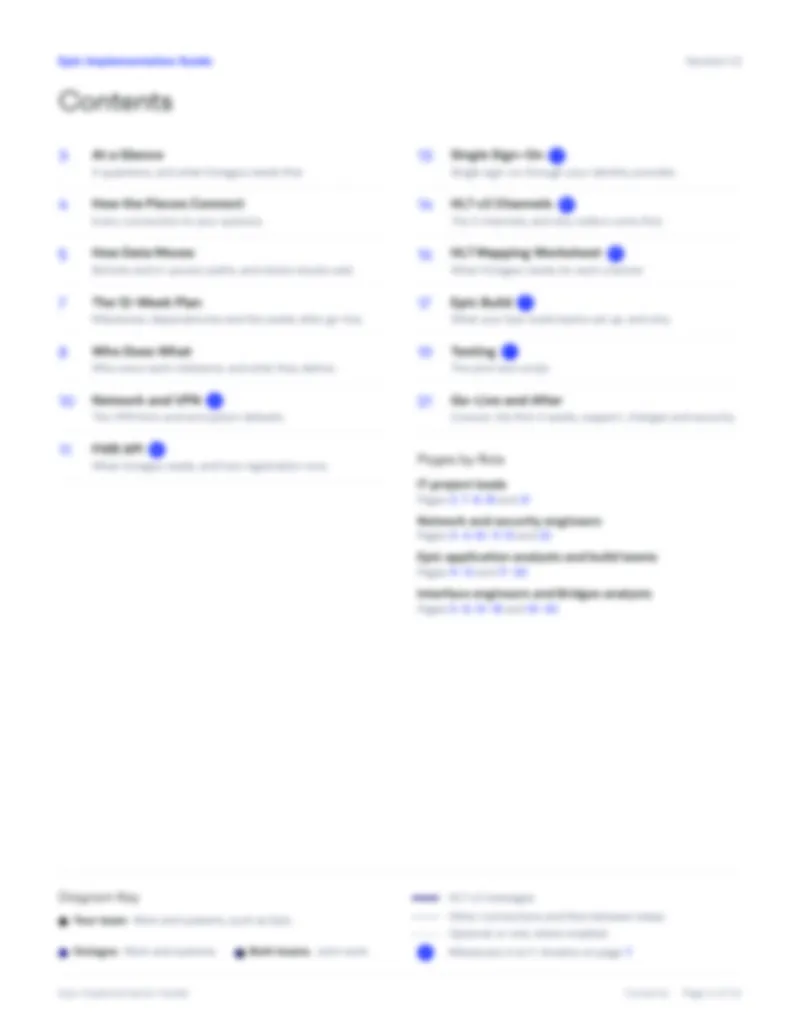
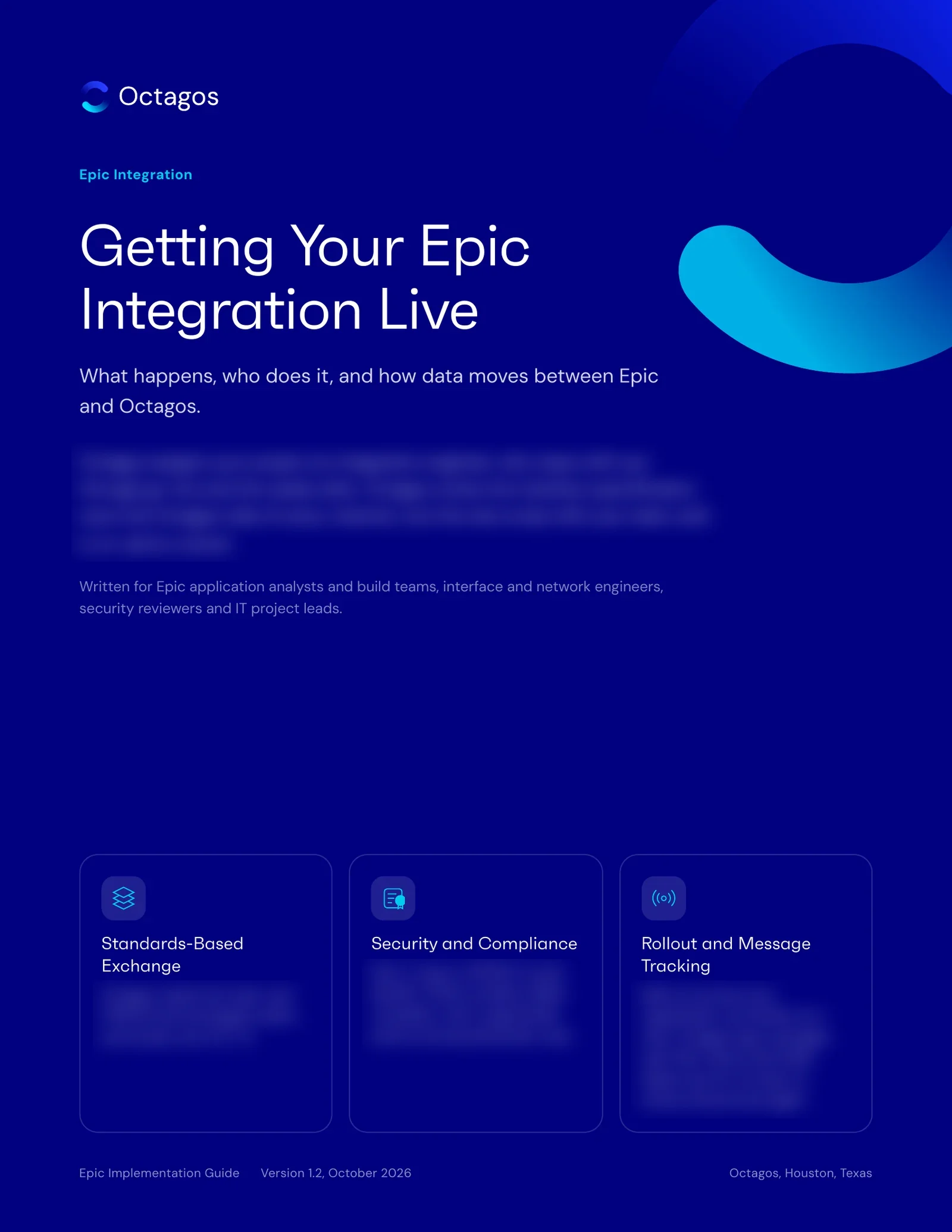
What the Guide Covers
- How the Pieces Connect and How Data Moves
- The 12-Week Plan and Who Does What
- Network, VPN, FHIR API and Single Sign-On (SSO)
- HL7 v2 Interfaces, Mapping and Epic Build
- Testing, Sign-Off, Go-Live and After
Request Received
Thanks. We've emailed you the Epic Implementation Guide.